Doomscrolling: Mengapa Kita Tak Bisa Berhenti Mengonsumsi Berita Buruk?
Pengantar: 3 AM dan Masih Scrolling
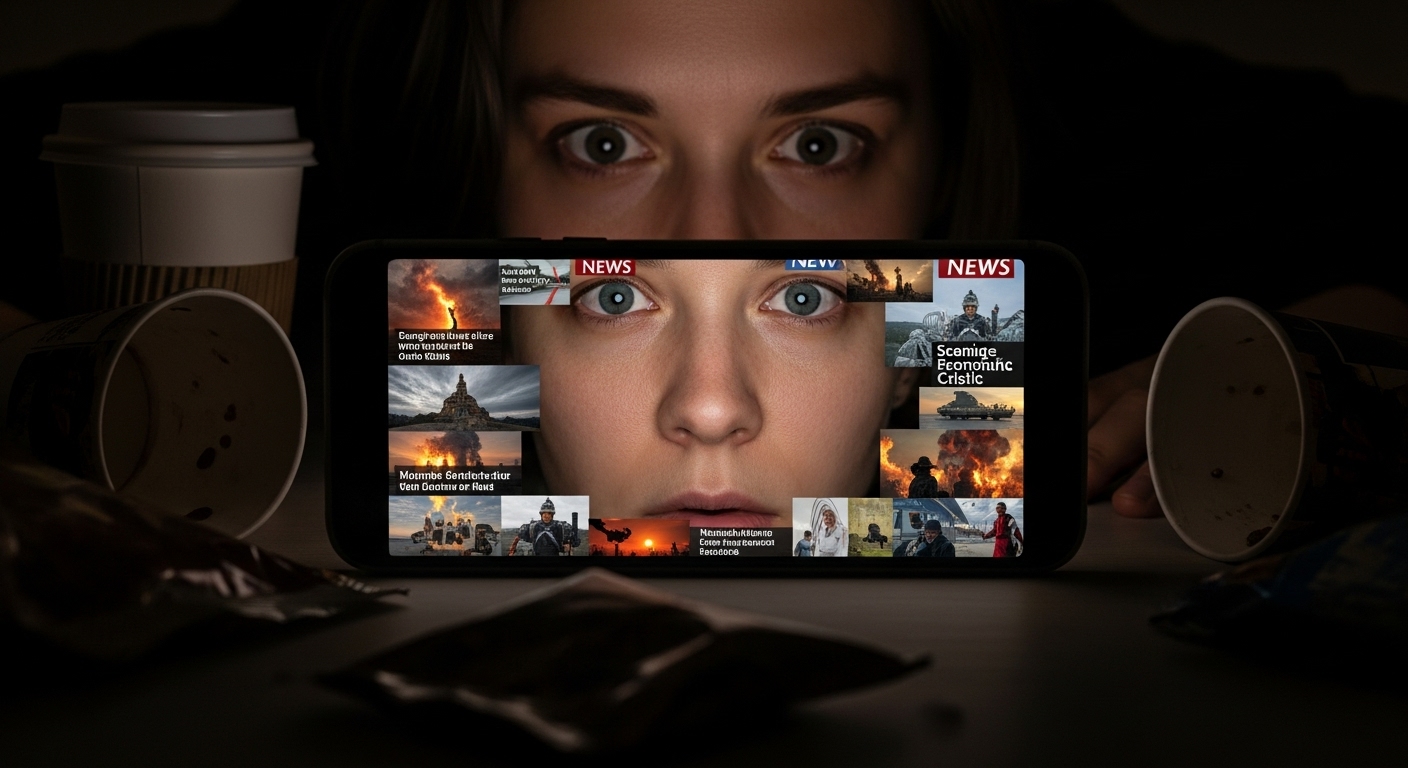
Jam menunjukkan 03:17 AM. Kamu tahu harus tidur. Besok ada meeting penting jam 8. Tapi jari kamu terus swipe. War in Middle East. Climate catastrophe update. Political scandal. Economic crisis. Airplane crash. Mass shooting. Pandemic variant.
Setiap berita bikin cemas. Setiap headline bikin jantung berdebar. Tapi kamu tak bisa berhenti. “Just one more scroll,” kata kamu untuk ke-50 kalinya.
Welcome to doomscrolling — addiction era digital yang merusak mental health tanpa kita sadari.
Apa Itu Doomscrolling?
Definisi
Doomscrolling (atau doomsurfing) adalah:
Compulsive consumption dari large quantities of negative online news, despite—atau bahkan because of—the fact that it makes you feel anxious, sad, atau depressed.
Characteristics:
- Endless scrolling through bad news
- Inability to stop despite emotional distress
- Often late at night (ketika defenses low)
- Feeling worse after, but doing it again
- Sense of helplessness dan doom
Istilah Baru, Fenomena Lama
Historical Context:
Humans always drawn to negative news. Newspapers knew: “If it bleeds, it leads.”
But Digital Age Changed Everything:
Pre-Internet:
- News datang on schedule (morning paper, evening TV)
- Limited exposure time
- Physical limits (newspaper ends)
Now:
- 24/7 news cycle
- Infinite scroll
- Personalized feeds
- Constant updates
- No natural stopping point
COVID-19 Amplification:
Term “doomscrolling” went viral during pandemic (2020):
- Constantly checking case numbers
- Refreshing death tolls
- Reading worst-case scenarios
- Anxiety spirals
Google Searches:
- “Doomscrolling” searches spiked 3000% in 2020
- Remained elevated through 2024
Mengapa Kita Doomscroll?
The Psychology Behind It
1. Negativity Bias
Evolutionary Psychology:
Humans evolved to:
- Pay more attention to threats
- Remember negative events better
- Scan environment for danger
Why: Ancestors who ignored rustling bush (potential predator) didn’t survive to reproduce.
Modern Problem: Brain can’t distinguish between:
- Real immediate threat (tiger in bushes)
- Abstract distant threat (geopolitical crisis)
Both trigger stress response.
2. Illusion of Control
The Logic: “If I stay informed, I can prepare/protect myself.”
The Reality: Most news we consume:
- About events kita can’t control
- Provides no actionable information
- Just increases anxiety
Paradox: More we scroll seeking control, more helpless we feel.
3. Intermittent Reinforcement
Slot Machine Effect:
Social media engineered seperti gambling:
- Most posts: mediocre/bad news (no reward)
- Occasional: interesting/funny content (reward!)
- Unpredictable timing (most addictive schedule)
Result: Brain release dopamine with variable rewards. We keep scrolling hoping for “hit.”
4. FOMO (Fear of Missing Out)
The Fear: “What if something important happens dan I miss it?”
Questions We Ask:
- What if emergency dan I’m uninformed?
- What if everyone talking about something I don’t know?
- What if I’m left behind?
Truth: True emergencies will find you. You don’t need 24/7 monitoring.
5. Parasocial Relationships
Phenomenon: We feel connected to strangers online. Their crises feel like our crises.
Example:
- Celebrity scandal feels personally distressing
- Strangers’ political rants affect our mood
- Viral trauma becomes our trauma
Problem: Human brains evolved for ~150 close relationships (Dunbar’s number).
Now we’re exposed to suffering of millions daily. We’re not equipped.
The Platform’s Role
Social Media Companies Know:
Engagement Metrics:
- Angry emoji = 5x more engagement than Like
- Negative content = higher shares
- Outrage = longer session times
The Algorithm:
Designed to maximize “time on app”:
- Shows you content that triggers emotion
- Negative emotions (anger, fear) are strongest
- You engage with negative content
- Algorithm shows MORE negative content
- Cycle continues
Whistleblower Frances Haugen (Facebook, 2021):
“Facebook knows that negative content keeps people on the platform longer. The algorithm actively amplifies content that makes us angry or scared because that drives engagement. They’re choosing profit over wellbeing.”
Internal Documents Revealed:
- Instagram exacerbates body image issues (they knew)
- Divisive content boosts engagement (they amplified it)
- Misinformation spreads faster (they profited)
News Media’s Incentive
Why Media Pushes Doom:
Business Model:
- Revenue from ads
- Ads sold based on views/clicks
- Negative headlines get more clicks
Headlines Compared:
❌ “Everything is Generally OK” → No clicks
✅ “We’re All Doomed: 10 Reasons Why” → Viral
Result: Media has financial incentive to emphasize crisis, catastrophe, conflict.
Availability Heuristic:
We overestimate likelihood of events kita sering lihat di news.
Reality Check:
- Global poverty: DOWN 50% in 20 years
- Literacy rates: highest in history
- Child mortality: DOWN 60% since 1990
- Life expectancy: UP globally
But you’d never know dari scrolling.
Dampak Nyata pada Mental Health
Anxiety dan Depression
Research Findings:
Study 1 (2023, Journal of Medical Internet Research):
- 3+ hours daily news consumption = 78% higher anxiety
- Doomscrolling before bed = sleep quality DOWN 62%
- Negative news exposure = depression symptoms UP 43%
Study 2 (2022, University of Indonesia):
- Gen Z doomscrollers: 85% report heightened anxiety
- 67% experience “vicarious traumatization”
- 54% feel constant sense of dread
Symptoms:
Acute:
- Racing heart saat baca headline
- Tightness di chest
- Difficulty concentrating
- Irritability
- Sleep disturbances
Chronic:
- Generalized anxiety disorder
- Clinical depression
- Burnout
- Emotional numbness
- Anhedonia (inability to feel pleasure)
Sleep Disruption
The Blue Light Problem:
Physical Effect:
- Blue light from screens suppresses melatonin
- Melatonin = sleep hormone
- Result: Circadian rhythm disrupted
The Content Problem:
Psychological Effect:
- Negative news activates stress response
- Cortisol dan adrenaline spike
- Brain in “alert” mode
- Impossible to sleep
Statistics:
- 73% of doomscrollers report insomnia
- Average sleep debt: 1.5 hours/night
- Sleep quality: 40% worse vs non-scrollers
Consequences:
- Impaired cognitive function
- Weakened immune system
- Increased mental health issues
- Weight gain
- Higher disease risk
Compassion Fatigue
Definition: Emotional exhaustion dari constant exposure to others’ suffering.
Progression:
Stage 1: Empathy
- “This is terrible. I care.”
- Emotional response
- Desire to help
Stage 2: Overwhelm
- “There’s so much suffering.”
- Feeling helpless
- Emotional overload
Stage 3: Numbness
- “I can’t care anymore.”
- Emotional shutdown
- Apathy dan cynicism
Quote dari Healthcare Worker:
“I used to cry reading about injustice. Now I scroll past videos of war, famine, violence and feel… nothing. I’m empty. And that scares me more than the news itself.”
Relationship Impact
Ways Doomscrolling Damages Relationships:
1. Physical Absence:
- Scrolling during family time
- Ignoring partner while in bed together
- Not present during conversations
2. Emotional Unavailability:
- Mood affected by news
- Taking out stress on loved ones
- No emotional energy left untuk connection
3. Conversation Dominated by Doom:
- Only talk about crisis
- Constant negativity
- Exhausting untuk others
4. Reduced Intimacy:
- Scrolling instead of quality time
- Bedtime scrolling instead of connection
- Stress reduces libido
Statistics:
- 64% of couples report arguments over phone use
- 41% feel partner is distracted by device during interactions
- Doomscrollers report 30% lower relationship satisfaction
Worldview Distortion
Mean World Syndrome:
Term coined by George Gerbner (1976), now amplified.
Definition: Belief that world is more dangerous than it actually is, caused by media consumption.
Effects:
Perception:
- Overestimate crime rates
- Think world getting worse (actually: improving in most metrics)
- Constant sense of impending doom
- Lost faith in humanity
Behavior Changes:
- Increased fear
- Social withdrawal
- Distrust of others
- Hyper-vigilance
Political Impact:
- Polarization
- Support for authoritarian “strong leaders”
- Erosion of nuance
- Inability to find common ground
Quote:
“I was convinced society was collapsing. I deleted Twitter, stopped watching news. Went outside. Talked to real neighbors. Most people are… normal. Kind. World felt less scary immediately.” — Former doomscroller, 34
Platform-Specific Doomscrolling
Twitter/X: Anger Engine
Why It’s Worst:
Algorithm Prioritizes:
- Controversial content
- Quote tweets (often dunks)
- Threads of outrage
- Viral bad takes
“Ratio” Culture: More replies than likes = pile-on happening
Result: Constant stream of people angry about something.
User Experience:
- Endless timeline (no bottom)
- Trending topics (usually disasters atau outrage)
- Notifications (dopamine hits)
- FOMO (missing discourse)
Instagram/TikTok: Highlight Reel Anxiety
Different Type of Doom:
Not just world events. Personal doom:
- Everyone’s life looks perfect (yours doesn’t)
- Comparison anxiety
- FOMO on experiences
- Body image issues
Plus:
- “For You” page learns your triggers
- Infinite scroll
- Autoplay (no conscious choice)
- Short videos = massive volume consumption
Reddit: Rabbit Hole of Despair
Structure Enables:
- Subreddits for every crisis
- r/collapse, r/antiwork, r/LateStageCapitalism, etc.
- Comment threads spiraling into doom
- “Doom and gloom” becoming identity
Echo Chambers:
- Algorithm shows you what you engage with
- Subreddits reinforce worldview
- Downvote dissent
- Radicalization potential
News Apps: Notification Assault
Push Notifications:
- Designed to alarm
- “BREAKING” untuk everything
- Multiple alerts about same event
- No off switch (in practice)
Headlines Optimized: For clicks, not calm. Fear sells.
Breaking Free: Practical Strategies
Level 1: Awareness
Track Your Usage:
Tools:
- Screen Time (iPhone)
- Digital Wellbeing (Android)
- Rescue Time (cross-platform)
Ask:
- How many hours daily?
- What times (morning doom? Night doom?)
- Which apps worst offenders?
- How do you feel after?
Journal: Note mood before dan after scrolling sessions. Pattern will emerge.
Level 2: Boundaries
Time Limits:
App-Specific Limits: Set daily limits:
- Twitter: 30 min/day MAX
- News apps: 20 min/day
- Instagram: 45 min/day
Phone Settings:
- Enable limits
- When time up: App grays out
- Requires override (adds friction)
Scheduled Check-Ins:
Instead of constant monitoring:
- Morning: 15 min news check
- Noon: 10 min social media
- Evening: 20 min catch-up
- That’s it.
No-Phone Zones:
Designate:
- Bedroom (charge phone elsewhere)
- Dining table
- Bathroom
- First/last hour of day
No-Scroll Times:
Commit to:
- No phones 1 hour before bed
- No scrolling during meals
- No phones during conversations
- One full day/week offline
Level 3: Digital Hygiene
Curate Your Feed:
Unfollow Ruthlessly:
- Accounts that make you anxious
- News junkies who only post doom
- Outrage merchants
- Negativity machines
Follow Intentionally:
- Accounts that inform without alarming
- Educational content
- Positive news sources
- Inspiration/art/beauty
Mute Keywords:
Most platforms let you mute:
- “Breaking”
- “Urgent”
- “Crisis”
- Names of triggering topics
Turn Off Notifications:
ALL OF THEM.
Except:
- Calls from favorites
- Important messages
- That’s literally it
You don’t need:
- News alerts (you’ll find out)
- Social media notifications (they can wait)
- Email push (check on schedule)
Level 4: Replacement Behaviors
What To Do Instead:
When Urge to Scroll Hits:
✅ Physical Activities:
- 10 pushups
- Walk around block
- Stretch
- Dance to one song
✅ Creative Outlets:
- Doodle
- Write (journal, poetry, whatever)
- Play instrument
- Photo/video (of real life, not for posting)
✅ Connection:
- Call a friend (actually talk)
- Hug someone
- Play with pet
- Have real conversation
✅ Mindfulness:
- 5 deep breaths
- 5-min meditation
- Notice 5 things you can see
- Grounding exercise
✅ Analog Activities:
- Read physical book
- Do puzzle
- Cook something
- Tend plants
Level 5: Mindset Shifts
Reframe Your Thinking:
Old: “I need to stay informed.” New: “I choose to be informed without being consumed.”
Old: “What if I miss something important?” New: “Truly important information will reach me.”
Old: “Everyone else is scrolling.” New: “I’m choosing different path for my wellbeing.”
Old: “Scrolling relaxes me.” New: “Scrolling numbs me. Rest rejuvenates me.”
Permission to Disconnect:
You don’t have to:
- Have opinion on everything
- Be first to know
- Engage with every crisis
- Solve world problems today
You’re allowed to:
- Not know about something
- Take breaks from news
- Protect your mental health
- Choose peace over “staying informed”
Quote:
“I don’t follow the news anymore. Not because I don’t care, but because I care about being effective. I can’t help anyone if I’m paralyzed by anxiety from doomscrolling. Now I choose one cause, volunteer regularly, donate monthly. That’s my news—the change I’m actually part of.” — Sarah, 29, former news junkie
Positive Information Diet
Seek Balance
For Every Doom Article, Consume:
Solution-Focused Content:
- Organizations doing good work
- Policy proposals yang working
- Community initiatives
- Scientific breakthroughs
Good News Sources:
- Positive News (positivenews.org.uk)
- Good News Network (goodnewsnetwork.org)
- The Happy Broadcast (Instagram: @the_happy_broadcast)
- Goodable (goodable.co)
Not “Toxic Positivity”: Acknowledge problems exist. But balance doom dengan:
- Progress being made
- People doing good
- Solutions being implemented
- Reasons for hope
Quality Over Quantity
Instead of:
- 20 shallow headlines from 20 sources
- Sensational hot takes
- Unverified claims
- Opinion disguised as news
Choose:
- 2-3 reputable sources
- Long-form journalism
- Fact-checked reporting
- Context dan nuance
Weekly Deep Dive vs Daily Panic:
Instead of daily doom:
- One weekly news digest (The Economist, Atlantic, etc.)
- Monthly magazine subscription
- Podcasts (you can choose when to listen)
Recovery Stories: From Doomscroll to Digital Wellness
Case Study 1: The Journalist
Background: 27-tahun journalist. Job required constant news monitoring.
Rock Bottom:
- Panic attacks daily
- Insomnia
- Relationship strain
- Crying over world events she couldn’t control
The Shift:
- Changed beat dari breaking news ke features
- Phone off after 7pm
- Therapy untuk anxiety
- Deleted Twitter dari phone
6 Months Later:
- Anxiety reduced 80%
- Sleep improved dramatically
- Rekindled hobbies (painting)
- “I’m still informed, just not consumed.”
Case Study 2: The Parent
Before:
- Scrolling while kids played
- Bedtime = scrolling instead of sleep
- Constant distraction
- Modeling bad tech habits
Wake-Up Call: 5-year-old daughter: “Mommy, why do you love your phone more than me?”
Changes:
- Phone in different room during family time
- Visual timer (30 min daily limit)
- Morning routine tanpa screens
- Replaced scrolling dengan:
- Reading to kids
- Outdoor play
- Board games
- Actual conversations
Result:
- Relationship dengan kids transformed
- Present moment awareness
- Role-modeling healthy tech use
- Mental health vastly improved
Case Study 3: The Student
Context: 20-tahun university student. Doomscrolling 4-6 hours daily.
Impact:
- GPA dropped
- Depression
- Social isolation
- Lost sense of purpose
Intervention:
- Deleted all news apps
- Limited social media to 1 hour (scheduled)
- Started therapy
- Joined campus volunteer group (actual action vs passive doom)
Outcome:
- Grades recovered
- Depression lifted (with therapy)
- Found community
- “Taking action feels better than consuming doom.”
Quote:
“I realized I wasn’t ‘staying informed.’ I was torturing myself with problems I couldn’t solve while neglecting problems I could—like my own wellbeing, my relationships, my education. Now I choose where I put my energy.”
The Bigger Picture: Systemic Solutions
What Tech Companies Should Do
Ethical Design:
1. Redesign Algorithms:
- Deprioritize inflammatory content
- Boost constructive discussions
- Promote diverse perspectives
- Show solutions alongside problems
2. Built-In Limits:
- Automatic “time for a break” prompts
- Default daily limits
- Easier unsubscribe/mute options
- “Are you sure?” friction for late-night scrolling
3. Transparency:
- Show users how algorithms work
- Disclose engagement tactics
- Data about own usage patterns
- Impact on mental health
4. Features for Wellbeing:
- “Positive news” filter
- Chronological (vs algorithmic) feed option
- Batch notifications instead of constant
- Easy “take a break” mode
Some Progress:
- Instagram hiding likes (some regions)
- TikTok adding screen time notifications
- Twitter’s “leave this conversation” feature
But: Profit incentives still drive engagement optimization over wellbeing.
What News Media Should Do
Responsible Reporting:
1. Solutions Journalism: For every problem reported, include:
- What’s being done
- What’s working
- How people can help
2. Context:
- Historical perspective
- Statistical reality
- Avoid sensationalism
- Proportional coverage
3. Mental Health Awareness:
- Content warnings untuk disturbing content
- Resources for readers
- Acknowledge psychological impact
4. Slow News:
- Weekly digests
- Thoughtful analysis vs hot takes
- Quality over speed
Examples Doing It Right:
- Constructive Journalism Movement
- BBC World Hacks (solution-focused)
- De Correspondent (ad-free, member-supported)
What We Can Advocate For
Policy Level:
1. Digital Rights:
- Right to disconnect (already law in some countries)
- Data portability
- Algorithm transparency
- Platform accountability
2. Media Literacy:
- Teach critical thinking
- Recognize manipulation
- Understand algorithms
- Healthy tech use
3. Worker Protections:
- Limits on after-hours communication
- Mental health support
- Recognition of digital burnout
Countries Leading:
France: Right to disconnect law (2017) Italy: Similar legislation Spain: Remote workers can ignore emails after hours
Creating a Doomscroll-Free Culture
Social Norms
In Relationships:
- “Phone stack” at dinners (everyone stacks phones, first to check pays bill)
- Device-free date nights
- Morning coffee without screens
- Bedtime routines tanpa scrolling
In Families:
- Tech-free meals
- Charge phones outside bedrooms
- Weekend offline time
- Model healthy use untuk kids
In Friendships:
- When together, be present
- “No phones” agreements
- Do activities not amenable to scrolling (hiking, sports, crafts)
- Support each other’s digital wellness
In Workplaces:
- No expectation of after-hours responses
- Meeting-free days
- “Email jail” (batch process at set times)
- Mental health days explicitly allowed
Community Support
Digital Detox Groups:
- Accountability partners
- Shared challenges (30-day no Twitter, etc.)
- Tips dan strategies
- Celebrate milestones
Real-World Connection: Replace screen time dengan:
- Book clubs
- Sports leagues
- Volunteer work
- Classes (cooking, art, dance)
- Religious/spiritual communities
- Hobby groups
Choose Your Reality
Doomscrolling promises to keep us informed but delivers anxiety, depression, sleep deprivation, dan distorted worldview.
The Paradox: More we consume news of world’s problems, less energy we have untuk address actual problems dalam our sphere of influence.
The Truth:
- You don’t need to know everything
- You can’t fix everything
- Constant consumption isn’t consciousness—it’s compulsion
- Being informed ≠ being overwhelmed
- Your mental health matters MORE than “staying updated”
The Choice:
Every moment you pick up your phone is choice:
- Doom atau peace?
- Anxiety atau calm?
- Passive consumption atau active living?
- Someone else’s curated crisis atau your actual life?
The Path Forward:
1. Awareness: Recognize the pattern 2. Boundaries: Protect your time dan mind 3. Alternatives: Replace doom dengan life 4. Community: Connect IRL 5. Action: Channel concern into constructive contribution 6. Balance: Stay informed without being consumed 7. Compassion: For yourself dalam breaking free
Final Thought:
“The world has always had problems. The difference now is we can watch them unfold in real-time, 24/7, on a device in our pocket. But you weren’t put on this earth to witness every tragedy, engage with every outrage, or carry the weight of every crisis. You were put here to live YOUR life, love YOUR people, and make YOUR corner of the world a little brighter. Start there.”
Action Steps (Right Now):
- Close this article
- Put phone down
- Look around your actual room
- Notice something beautiful
- Take three deep breaths
- Go hug someone you love
Or go outside. Or call a friend. Or just sit in silence.
The world will still be there tomorrow. But so will you—hopefully rested, connected, and ready to actually engage with life, not just scroll through its disasters.
🌅 Log off. Live on. 🌅
Struggling dengan digital addiction atau anxiety? Resources:
- Center for Humane Technology (humanetech.com)
- Digital Wellness Institute
- Local therapists specializing in tech addiction
- Support groups: r/nosurf (yes, ironic it’s on Reddit)
Remember: Asking for help is strength, not weakness. You’re not alone dalam this. 💚
Artikel Terkait
Fenomena K-Pop: Bagaimana Budaya Korea Menaklukkan Dunia
Pengantar
Siapa yang menyangka bahwa musik dari semenanjung Korea akan mendominasi charts global, menjual millions of albums worldwide, dan mengubah …
Baca ArtikelMembangun Kembali Ikatan: Kebangkitan Komunitas Lokal sebagai Fenomena Sosial
Di tengah arus modernitas yang semakin menekankan pada pencapaian individu dan isolasi digital, sebuah fenomena menarik sedang terjadi di berbagai …
Baca Artikel
Komentar