Hustle Culture: Ketika 'Kerja Keras' Menjadi Toxic dan Merusak Kesehatan Mental
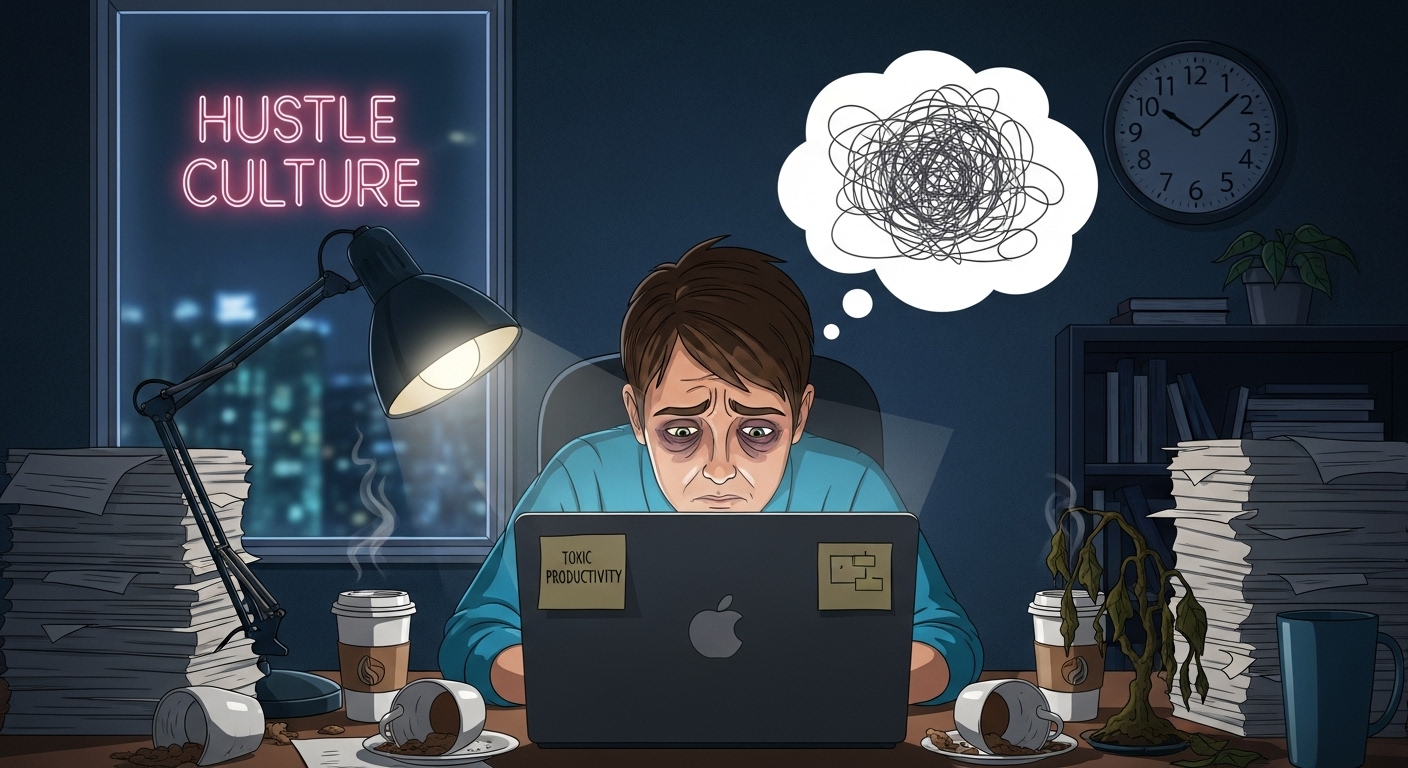
“Rise and Grind”
Bangun jam 4 pagi. Gym sebelum sunrise. Kerja 12+ jam. Side hustle sampai tengah malam. Tidur 4-5 jam. Repeat.
Ini adalah realita yang diglorifikasi oleh hustle culture — sebuah mentalitas yang menjadikan kerja keras ekstrem sebagai badge of honor, dimana istirahat dianggap weakness dan burnout dipandang sebagai ‘part of the journey.’
Tapi di balik Instagram posts yang aesthetic dan LinkedIn humble-brags tentang “no days off,” ada epidemi silent yang melanda generasi muda: burnout, anxiety, dan kehilangan makna hidup.
Apa Itu Hustle Culture?
Definisi
Hustle Culture adalah belief system yang:
- Mengagungkan kerja berlebihan sebagai virtue utama
- Mengidentikkan produktivitas dengan value sebagai manusia
- Menganggap istirahat sebagai laziness
- Mempromosikan “sleep is for the weak” mentality
- Mengukur kesuksesan hanya dari output ekonomi
Akar Historis
Protestant Work Ethic (Max Weber, 1905):
- Kerja keras sebagai calling religious
- Wealth sebagai tanda divine favor
- Foundation dari kapitalis modern
American Dream Mythology:
- “Anyone can succeed dengan hard work enough”
- Self-made millionaire narrative
- Meritocracy myth
Digital Age Amplification:
- Social media membuat hustle visible 24/7
- Gig economy menghilangkan work-life boundaries
- Startup culture glorifying 80-hour weeks
Manifestasi Modern: From Silicon Valley to Social Media
Tech Industry’s Toxic Legacy
“Move Fast and Break Things” (Facebook motto lama):
Silicon Valley popularized extreme work culture:
Characteristics:
- 100-hour work weeks as norm
- “Crushing it” mentality
- All-nighters sebagai team bonding
- Burnout as rite of passage
- Unlimited PTO (yang paradoxically tidak pernah dipakai)
Famous Examples:
Elon Musk:
“Nobody ever changed the world on 40 hours a week.”
Claims sleeping di factory floor, working 120-hour weeks.
Jack Ma (Alibaba founder): Promoted “996 culture” (9am-9pm, 6 days/week) sebagai “blessing.”
Gary Vaynerchuk: “Crush it,” “Hustle,” “No excuses” — built empire on hustle gospel.
Influencer Economy
Instagram Reality:
Feed penuh dengan:
- 5am morning routine aesthetic
- Laptop di beach (digital nomad fantasy)
- “CEO of my own life” captions
- Passive income screenshots
- Motivational quotes over luxury cars
The Illusion:
What they don’t show:
- Financial privilege yang enable lifestyle
- Pre-existing wealth
- Survivor bias (for every success, thousands failed)
- Mental health struggles
- Unsustainability dari “grind”
Corporate Exploitation
Unpaid Overtime Culture:
Di Indonesia:
- 60% pekerja millennial kerja >45 jam/minggu
- Lembur sering tidak dibayar
- “Passion project” rhetoric mengaburkan exploitation
Startup “Perks”:
- Free dinner = expected untuk stay late
- Beer Fridays = blur work-life boundaries
- Ping pong tables = distract dari poor compensation
- “We’re a family” = guilt you into overworking
Dampak Nyata: The Burnout Epidemic
Mental Health Crisis
Statistics Indonesia (2023):
- 71% pekerja Gen Z dan Millennial melaporkan burnout symptoms
- 45% mengalami anxiety disorders
- 32% depression
- Mental health claims naik 300% since 2019
Global Numbers:
- WHO recognizes burnout sebagai “occupational phenomenon” (2019)
- Burnout-related disability claims naik 40% globally
Physical Health Consequences
Karoshi (過労死) - Death from Overwork:
Originally Japanese term, now global phenomenon.
Health Impacts:
- Cardiovascular disease: Risk 60% lebih tinggi dengan >55 jam/minggu
- Stroke: Risk naik 35%
- Type 2 Diabetes: Sleep deprivation effects
- Weakened immune system: Chronic stress
- Accelerated aging: Telomere shortening
Case Studies:
Japan (2016): Matsuri Takahashi, 24-tahun advertising employee, bunuh diri setelah work 105-hour weeks. Led to labor law reforms.
China (2021): Multiple tech workers collapsed dan died dari overwork. Sparked “Tang Ping” (lying flat) movement.
Indonesia (2022): Jakarta-based startup employee, 28, meninggal dari cardiac arrest. Worked 80+ hours/week untuk 3 bulan straight.
Psychological Toll
Burnout Symptoms:
Emotional Exhaustion:
- Feeling drained constantly
- Cynicism dan detachment
- Loss of enthusiasm
- Irritability
Reduced Performance:
- Inability to concentrate
- Decreased creativity
- More errors dan mistakes
- Procrastination
Physical Manifestations:
- Chronic fatigue
- Insomnia
- Headaches
- Digestive issues
Relationship Breakdown
Social Isolation:
- No time untuk friends atau family
- Neglected romantic relationships
- Missed important life events
- Loneliness despite being “successful”
Identity Crisis:
“When I got laid off, I realized my entire identity was my job. I didn’t know who I was anymore. I had no hobbies, no close friendships. Just a resume.” — Former tech worker, 32
Mengapa Hustle Culture Begitu Menarik?
Psychological Hooks
1. Status dan Validation:
- Busy = important
- Overwork signals commitment
- Social media likes untuk “grind” posts
- Fear of being seen as lazy
2. Financial Anxiety:
- Rising cost of living
- Job insecurity
- “Gotta secure the bag” mentality
- Student debt pressures
3. Comparison Culture:
- Everyone’s highlight reel
- Fear of falling behind
- “If they can do it, why can’t I?”
- Success defined narrowly (wealth, status)
4. Delayed Gratification Promise:
- “Suffer now, enjoy later”
- “Temporary sacrifice untuk permanent success”
- Future-focused living (never present)
Societal Factors
Economic Structure:
- Stagnant wages + inflation
- Gig economy insecurity
- Weakened labor protections
- Rising inequality (hustle to survive, not thrive)
Cultural Messages:
- Meritocracy myth
- “Poverty is choice/laziness”
- Entrepreneurship worship
- Self-optimization obsession
The Counter-Movement: Rest as Resistance
“Lying Flat” (Tang Ping) - China
Origin (2021): Response to “996” work culture dan unaffordable housing.
Philosophy:
- Minimal work for minimal survival
- Reject consumerism
- Refuse to marry, buy homes, have kids (too expensive)
- Opt out dari rat race
Impact:
- CCP crackdown (seen as threat)
- Global resonance
- Sparked conversations about life purpose
“Quiet Quitting” - Global
Definition (2022 viral trend): Not actually quitting. Doing minimum required work, nothing extra.
Core Idea:
- Work to live, not live to work
- Boundaries are healthy
- “Above and beyond” without compensation is exploitation
Controversy:
- Employers calling it “disengagement”
- Workers calling it “acting your wage”
- Generational divide (Boomers vs Gen Z)
Reality: It’s just… setting boundaries. That we needed term for this shows how toxic norms became.
“Soft Life” Movement
Origin: Black women, particularly Nigerian, promoting life ease over struggle.
Principles:
- Rest without guilt
- Enjoy life NOW, not just future
- Reject “strong Black woman” trope (constant struggle)
- Choose peace over hustle
Spread: Resonates with anyone exhausted dari grind culture.
Solutions: Reclaiming Your Time and Sanity
Individual Level
1. Set Non-Negotiable Boundaries:
✅ Do:
- No emails setelah 6pm
- One day/week completely off
- Lunch breaks away dari desk
- Vacation days actually dipakai
❌ Don’t:
- Check Slack saat weekend
- Guilt about leaving on time
- Skip meals untuk “productivity”
2. Redefine Success:
Move beyond economic metrics:
- Quality relationships
- Health dan wellbeing
- Personal growth
- Contributions to community
- Experiences over possessions
3. Practice Rest as Skill:
Rest isn’t lazy:
- Sleep 7-9 hours
- Regular exercise (not punishment)
- Hobbies tanpa monetization
- Mindfulness atau meditation
- Nature time
4. Unfollow Toxic Content:
Curate digital environment:
- Mute “rise and grind” accounts
- Unfollow flexing culture
- Follow balanced lifestyle advocates
- Limit social media consumption
5. Seek Support:
- Therapy untuk burnout recovery
- Support groups
- Honest conversations dengan loved ones
- Career counseling jika needed
Workplace Level
Companies Need To:
1. Policy Changes:
- Enforce maximum hours
- Paid overtime atau comp time
- Genuine unlimited PTO (dengan minimum requirements)
- Mental health days
- Right to disconnect laws
2. Culture Shifts:
- Leaders modeling balance
- Promote based on results, not face time
- Celebrate efficiency, not overwork
- Psychological safety untuk boundaries
3. Benefits:
- Mental health coverage
- Sabbaticals
- Flexible working
- Parental leave (for all genders)
- Wellness programs (yang genuine)
Societal Level
We Need:
1. Labor Law Reforms:
- Enforced work hour limits
- Stronger protections for gig workers
- Living wages (reduce need for multiple jobs)
- Universal healthcare (decouple dari employment)
2. Education System Changes:
- Teach work-life balance
- Mental health literacy
- Diverse definitions of success
- Life skills beyond career
3. Economic Restructuring:
- Address wealth inequality
- Affordable housing
- Universal basic income discussions
- Value care work
4. Cultural Shift:
- Redefine productivity
- Honor rest
- Community over individualism
- Enough is enough mentality
Real Stories: From Burnout to Balance
Case Study 1: The Startup CTO
Before:
- 90-hour weeks untuk 3 years
- Neglected health, relationships
- Heart palpitations at 29
- “Success” but miserable
Breaking Point: Missed sister’s wedding untuk product launch. Realized: “What’s the point?”
After:
- Left company, joined stable corp with 40-hour week
- Salary cut 30%, happiness up 200%
- Rekindled relationships
- Rediscovered hobbies
- “I’m alive again, not just surviving.”
Case Study 2: The Influencer
Before:
- Content creation 12+ hours/day
- “Always on” untuk engagement
- Panic attacks
- Forgot why she started (love of photography)
Transformation:
- Scheduled posting (not real-time)
- Boundaries dengan followers
- One day/week completely offline
- Quality over quantity content
Result:
- Engagement initially dropped, then rebounded
- Mental health improved drastically
- Rediscovered creativity
- “My work is better because I’m better.”
Case Study 3: The Corporate Climber
Before:
- VP by 32 (youngest ever)
- Sacrificed everything
- No life outside work
- Burnout depression
The Shift:
- Voluntary demotion
- 4-day workweek
- Prioritized family dan health
- “I lost title, gained life.”
Lesson: Success means nothing jika you’re too burnt out to enjoy it.
Rest is Revolutionary
Hustle culture sold us lie: that our worth equals our productivity, that rest is weakness, that burning out is badge of honor.
Truth:
- You are human, not machine
- Rest is productive (recovery enables performance)
- Boundaries are healthy, not selfish
- Life is NOW, not just deferred future
- Enough is enough
Call to Action:
This Week:
- Take one full day OFF (no work)
- Sleep 8 hours for 3 nights
- Say NO to one extra request
- Do something purely for joy
This Month:
- Audit your time allocation
- Set 3 non-negotiable boundaries
- Have honest conversation dengan manager about workload
- Reconnect dengan one neglected relationship
This Year:
- Redefine what success means to YOU
- Build sustainable rhythms
- Seek help jika needed
- Remember: You’re allowed to rest
Remember:
“You don’t have to be productive every moment of every day. Rest is not a reward; it’s a necessity. Protect your peace. Your health. Your time. Your life is happening NOW—don’t miss it chasing someone else’s definition of success.”
The revolution isn’t more hustle. The revolution is rest, boundaries, and reclaiming our humanity.
🌟 Work to live. Don’t live to work. 🌟
Jika kamu experiencing burnout atau mental health crisis, reach out untuk help. Hotline: 119 ext 8 (Indonesia), atau speak dengan mental health professional. You’re not alone, dan you deserve support.
Artikel Terkait
Fenomena K-Pop: Bagaimana Budaya Korea Menaklukkan Dunia
Pengantar
Siapa yang menyangka bahwa musik dari semenanjung Korea akan mendominasi charts global, menjual millions of albums worldwide, dan mengubah …
Baca ArtikelMembangun Kembali Ikatan: Kebangkitan Komunitas Lokal sebagai Fenomena Sosial
Di tengah arus modernitas yang semakin menekankan pada pencapaian individu dan isolasi digital, sebuah fenomena menarik sedang terjadi di berbagai …
Baca Artikel
Komentar